Binary, Bits, and Bytes#
Binary numbers are the cornerstone of digital computing, serving as the fundamental language of modern computers.
Binary Numbers#
Unlike the base-10 decimal system that is commonly used, which relies on 10 digits (0 through 9), binary operates with just two digits: 0 and 1. This simplicity makes it ideal for representing and manipulating data in electronic circuits, where signals are either “on” (1) or “off” (0).
The animation below demonstrates the 256 possible combinations with eight light switches .
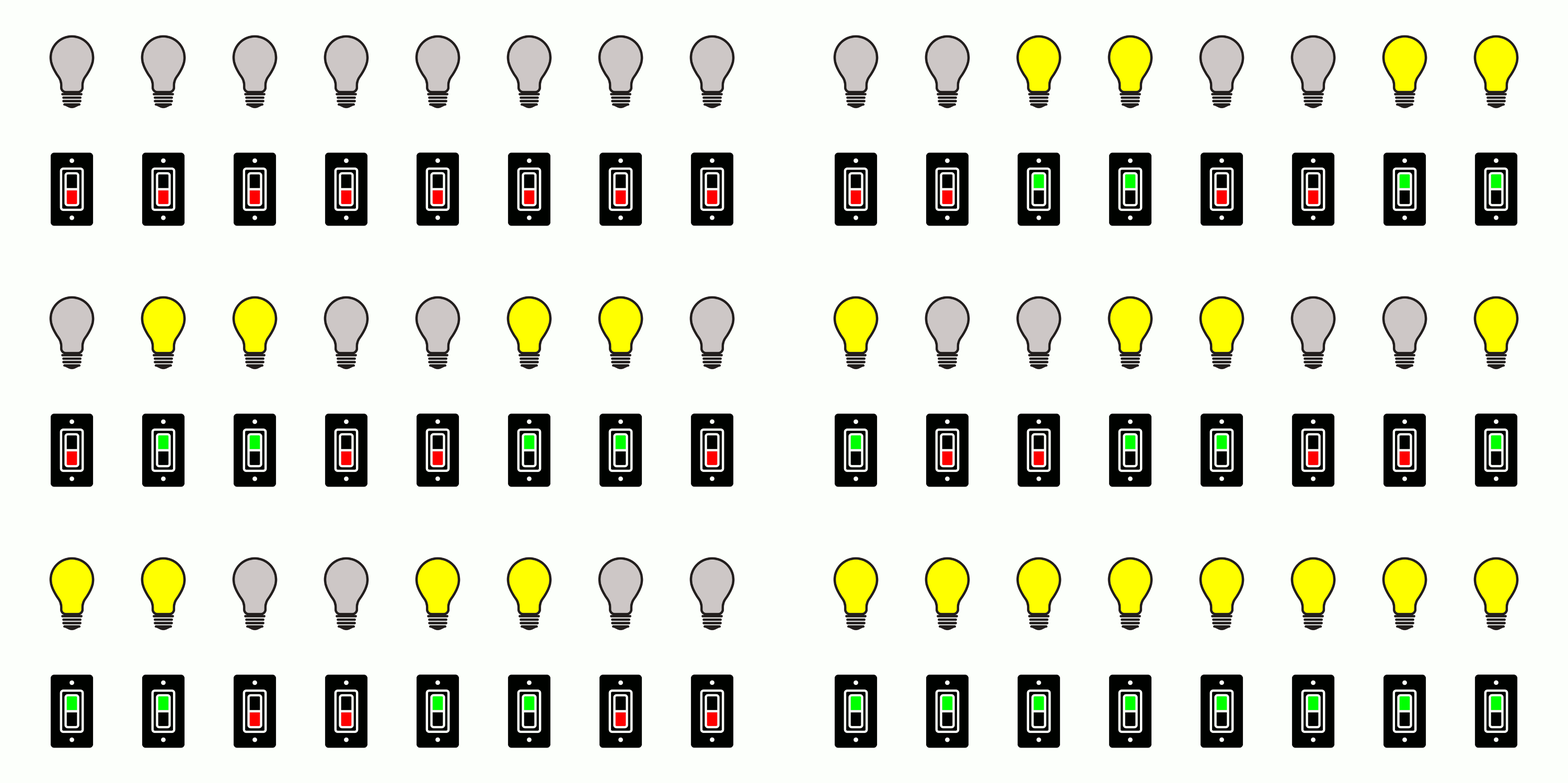
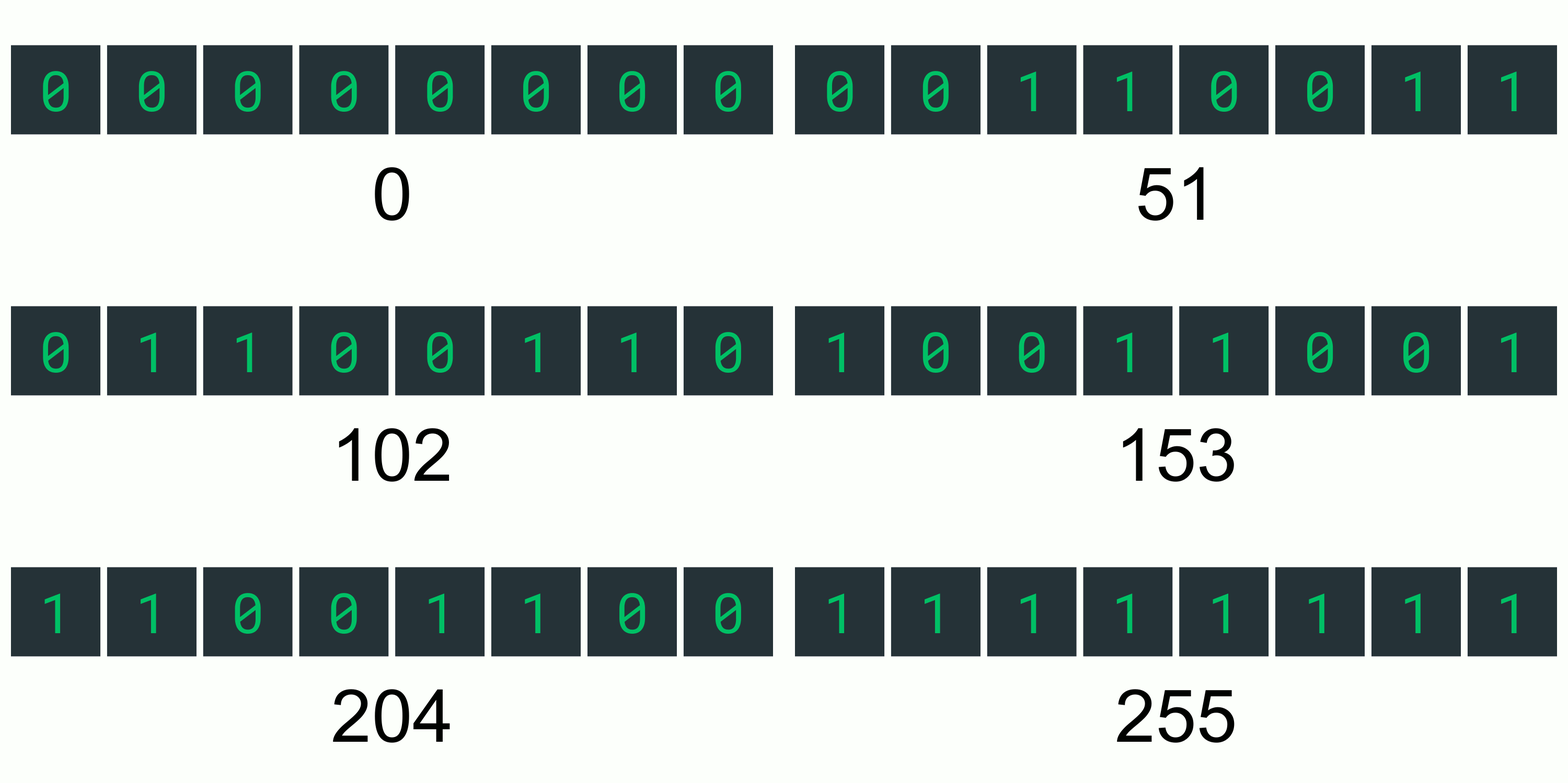
Binary numbers work on the principle of representing numbers using only two digits: 0 and 1. In the binary system, each digit’s position represents a power of 2, starting from the rightmost digit, which represents:
$2^0=1$
$2^1=2$
$2^2=4$
$2^3=8$
$2^4=16$
$2^5=32$
$2^6=64$
$2^7=128$
Here are the binary numbers and there base-10 equivalents from 0 - 99:
Note
It is common to represent binary numbers with a subscript 2 with or without parentheses to help distinguish them from base-10 numbers. $(1001)_2 = 9$ or $1001_2 = 9$
0 - 9 |
10 - 19 |
20 - 29 |
30 - 39 |
40 - 49 |
50 - 59 |
60 - 69 |
70 - 79 |
80 - 89 |
90 - 99 |
|---|---|---|---|---|---|---|---|---|---|
0 |
1010 |
10100 |
11110 |
101000 |
110010 |
111100 |
1000110 |
1010000 |
1011010 |
1 |
1011 |
10101 |
11111 |
101001 |
110011 |
111101 |
1000111 |
1010001 |
1011011 |
10 |
1100 |
10110 |
100000 |
101010 |
110100 |
111110 |
1001000 |
1010010 |
1011100 |
11 |
1101 |
10111 |
100001 |
101011 |
110101 |
111111 |
1001001 |
1010011 |
1011101 |
100 |
1110 |
11000 |
100010 |
101100 |
110110 |
1000000 |
1001010 |
1010100 |
1011110 |
101 |
1111 |
11001 |
100011 |
101101 |
110111 |
1000001 |
1001011 |
1010101 |
1011111 |
110 |
10000 |
11010 |
100100 |
101110 |
111000 |
1000010 |
1001100 |
1010110 |
1100000 |
111 |
10001 |
11011 |
100101 |
101111 |
111001 |
1000011 |
1001101 |
1010111 |
1100001 |
1000 |
10010 |
11100 |
100110 |
110000 |
111010 |
1000100 |
1001110 |
1011000 |
1100010 |
1001 |
10011 |
11101 |
100111 |
110001 |
111011 |
1000101 |
1001111 |
1011001 |
1100011 |
Bits and Bytes#
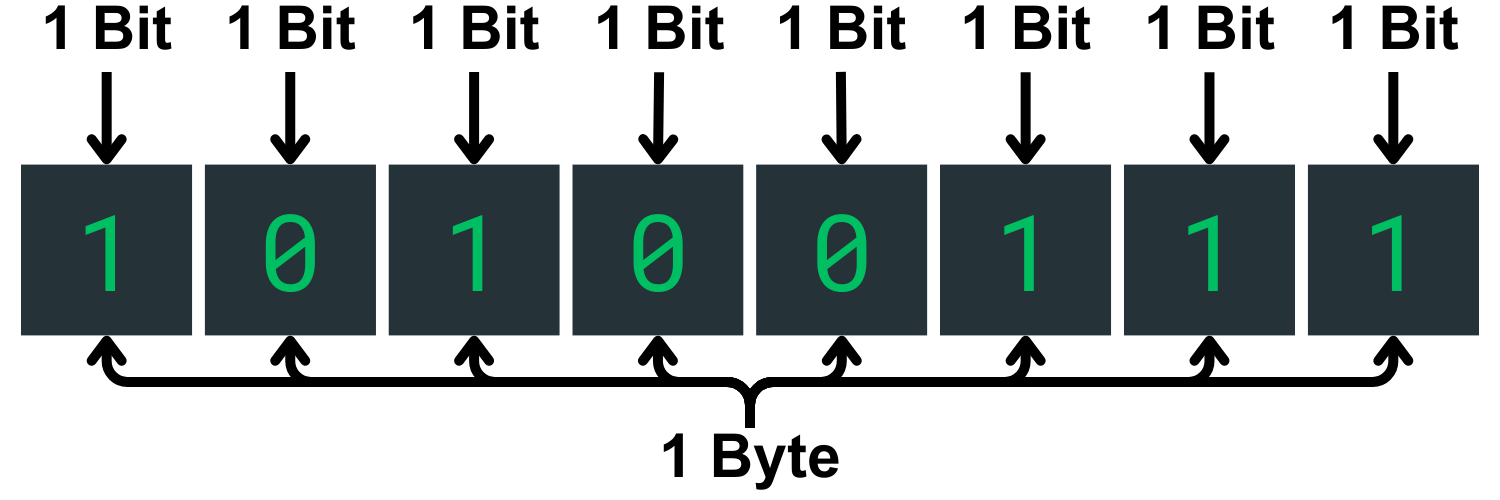
TODO
Binary Expansion#
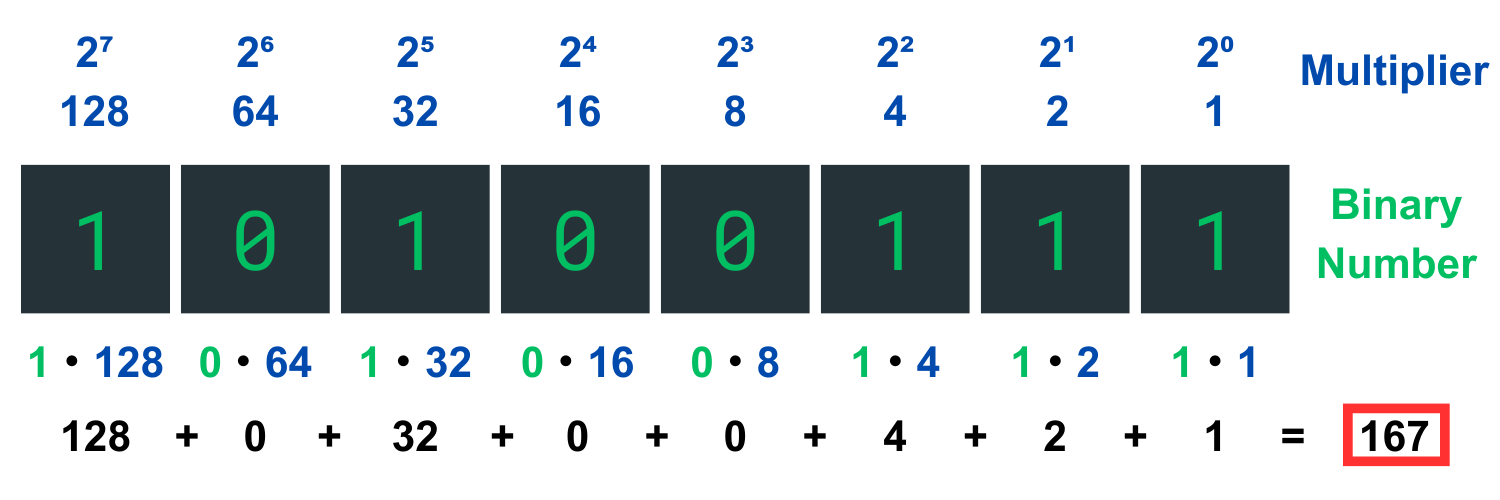
$$ \begin{align} (1010 \space 0111)_2 &= 1 \cdot 2^7 + 0 \cdot 2^6 + 1 \cdot 2^5 + 0 \cdot 2^4 + 0 \cdot 2^3 + 1 \cdot 2^2 + 1 \cdot 2^1 + 1 \cdot 1^0 \ &= 1 \cdot 128 + 0 \cdot 64 + 1 \cdot 32 + 0 \cdot 12 + 0 \cdot 8 + 1 \cdot 4 + 1 \cdot 2 + 1 \cdot 1 \ &= 128 + 0 + 32 + 0 + 0 + 4 + 2 +1 \ &= 167 \end{align} $$
Checkpoint: Binary Expansion#
Calculate the binary expansion of the following byte:
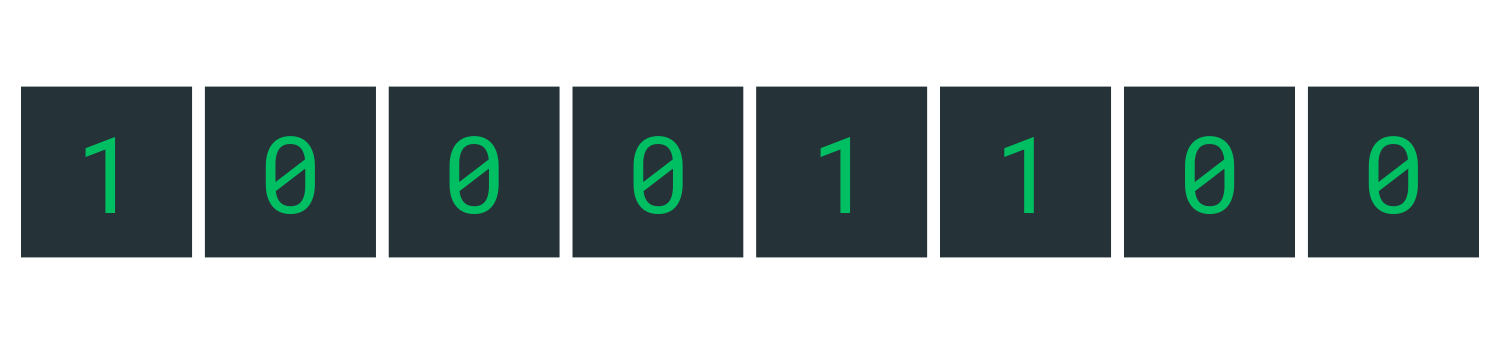
Click here to reveal the solutions.
Solution:
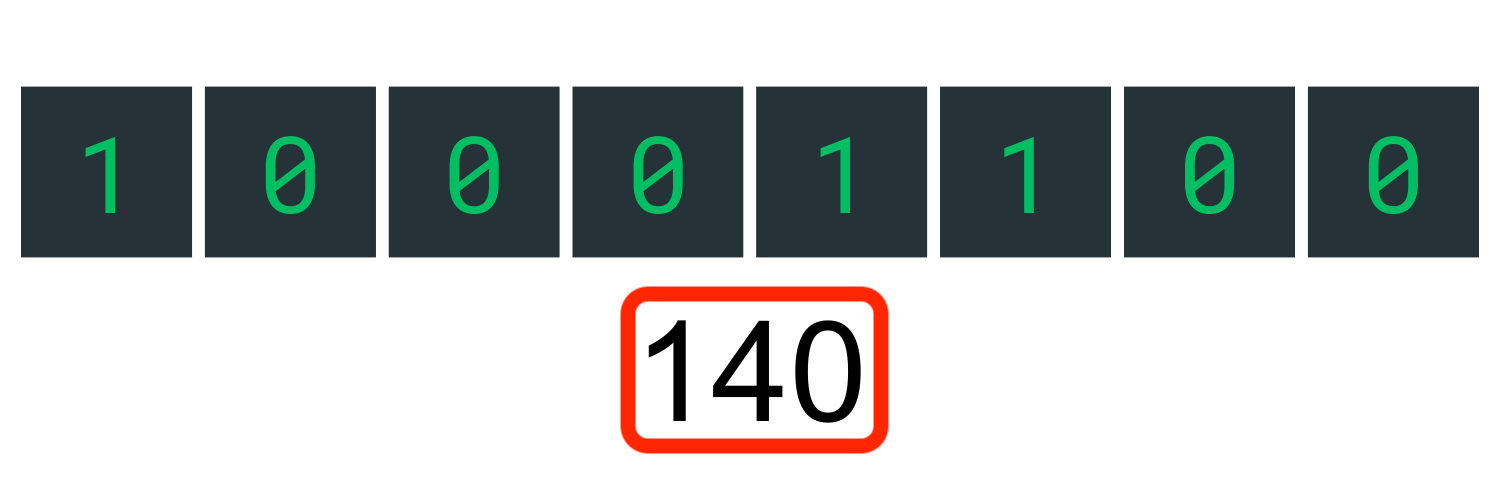
$$ \begin{align} (1000 \space 1100)_2 &= 1 \cdot 2^7 + 0 \cdot 2^6 + 0 \cdot 2^5 + 0 \cdot 2^4 + 1 \cdot 2^3 + 1 \cdot 2^2 + 0 \cdot 2^1 + 0 \cdot 1^0 \ &= 1 \cdot 128 + 0\cdot 64 + 0 \cdot 32 + 0 \cdot 12 + 1 \cdot 8 + 1 \cdot 4 + 0 \cdot 2 + 0 \cdot 1 \ &= 128 + 0 + 0 + 0 + 8 + 4 + 0 + 0 \ &= 140\end{align} $$