
Light-emitting Diodes (LEDs)#
As mentioned in the introduction, light-emitting diode (LED) is a semiconductor device that emits light when an electric current passes through it, commonly used in various electronic displays and lighting applications.
Parts of an LED#
TODO:EXPLAIN THE PARTS
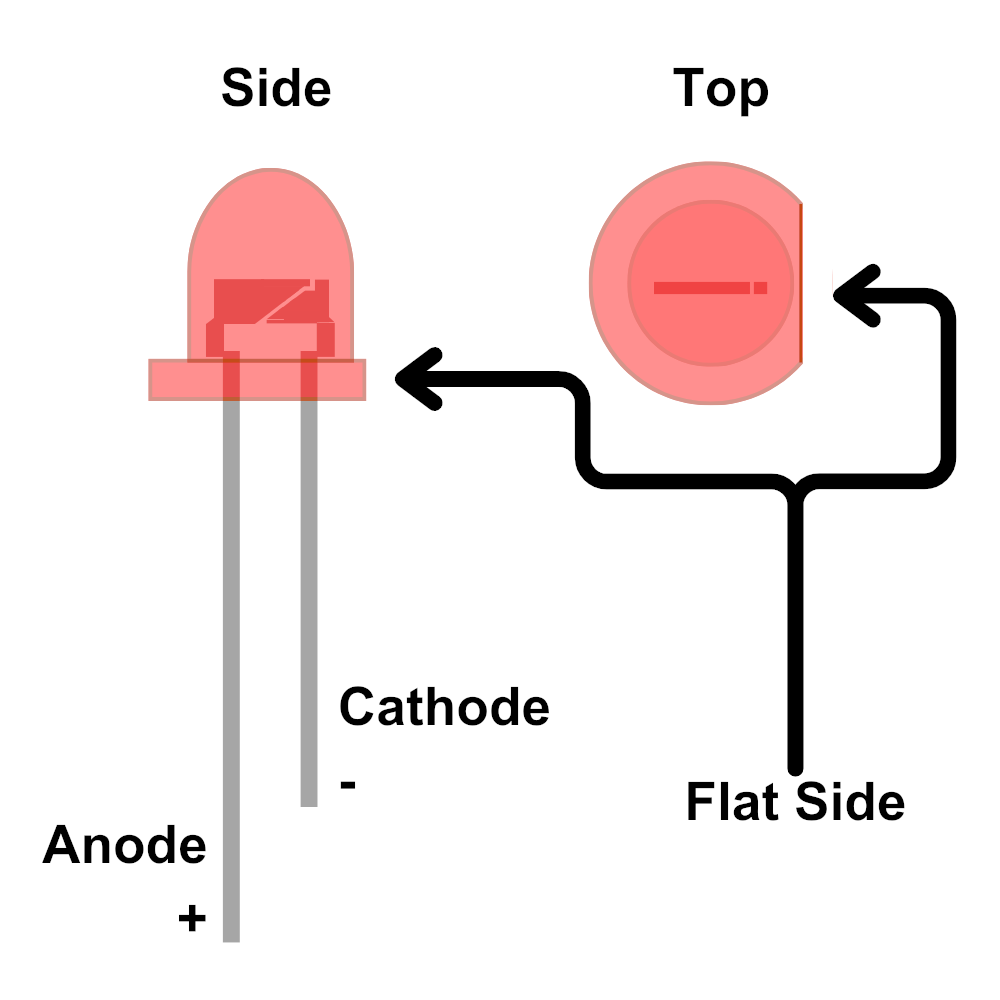
In an LED, the anode and cathode are the two terminals through which electricity flows to make the LED emit light.
The anode is the positive terminal, connected to the longer leg of the LED (usually indicated by a notch on the LED casing).
The cathode is the negative terminal, connected to the shorter leg (usually indicated by a flat edge on the LED casing).
Checkpoint: Anode or Cathode#
Which lead is the anode? Which lead is the cathode? What is the polarity of the different leads?
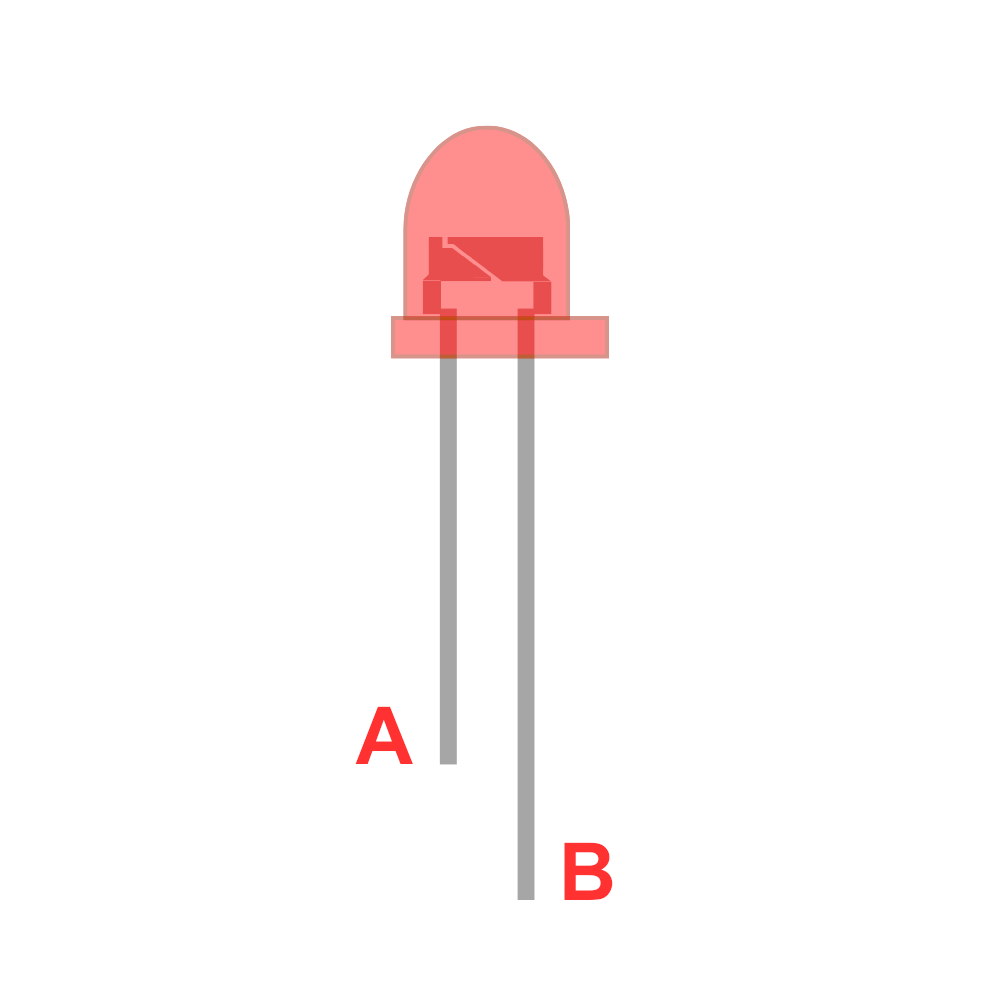
Click here to reveal the solutions.
Solution:
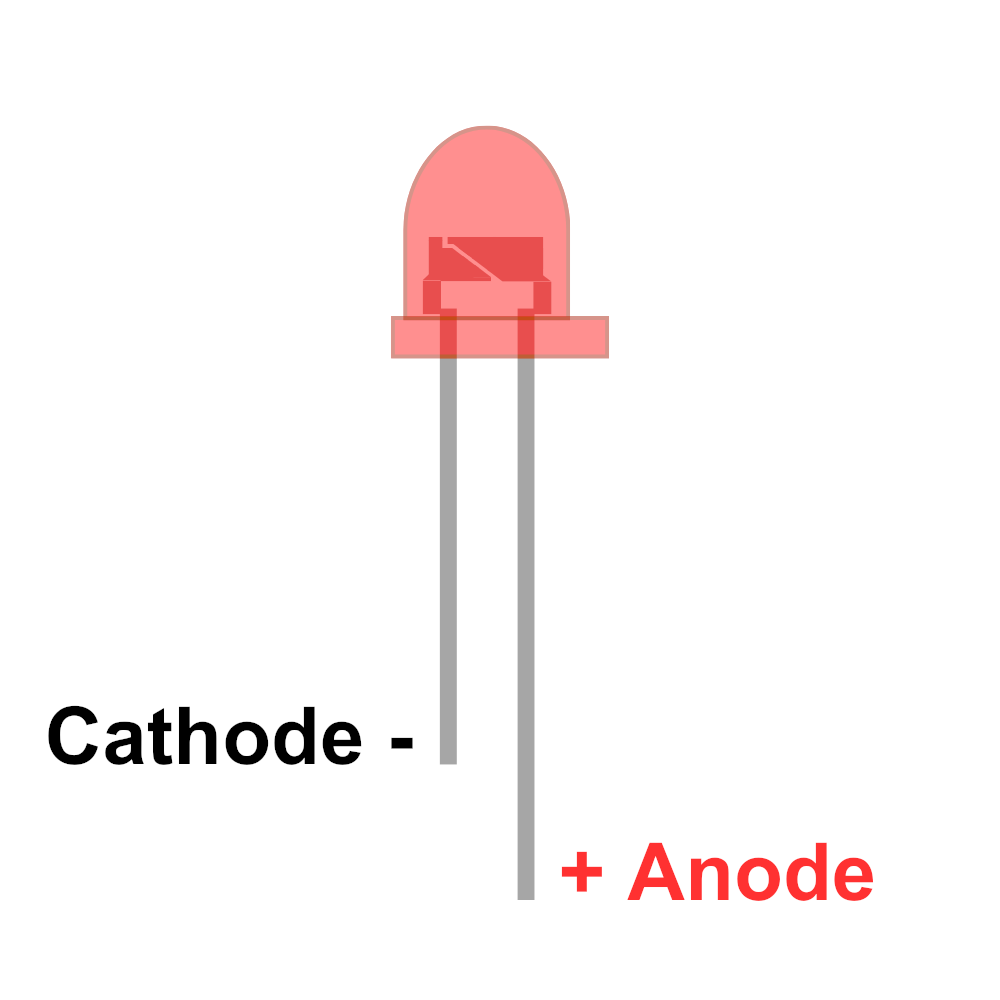
A has the flat side and the shorter lead so it is the cathode. The polarity is negative.
B has the longer lead so it is the anode. The polarity is positive.