Loops#
The following section explores the concept of loops, which are essential constructs used in programming to execute a block of code repeatedly. By understanding how loops function in Python, one can efficiently automate tasks, iterate through data structures, and streamline the execution of repetitive operations within a program.
The while Loop#
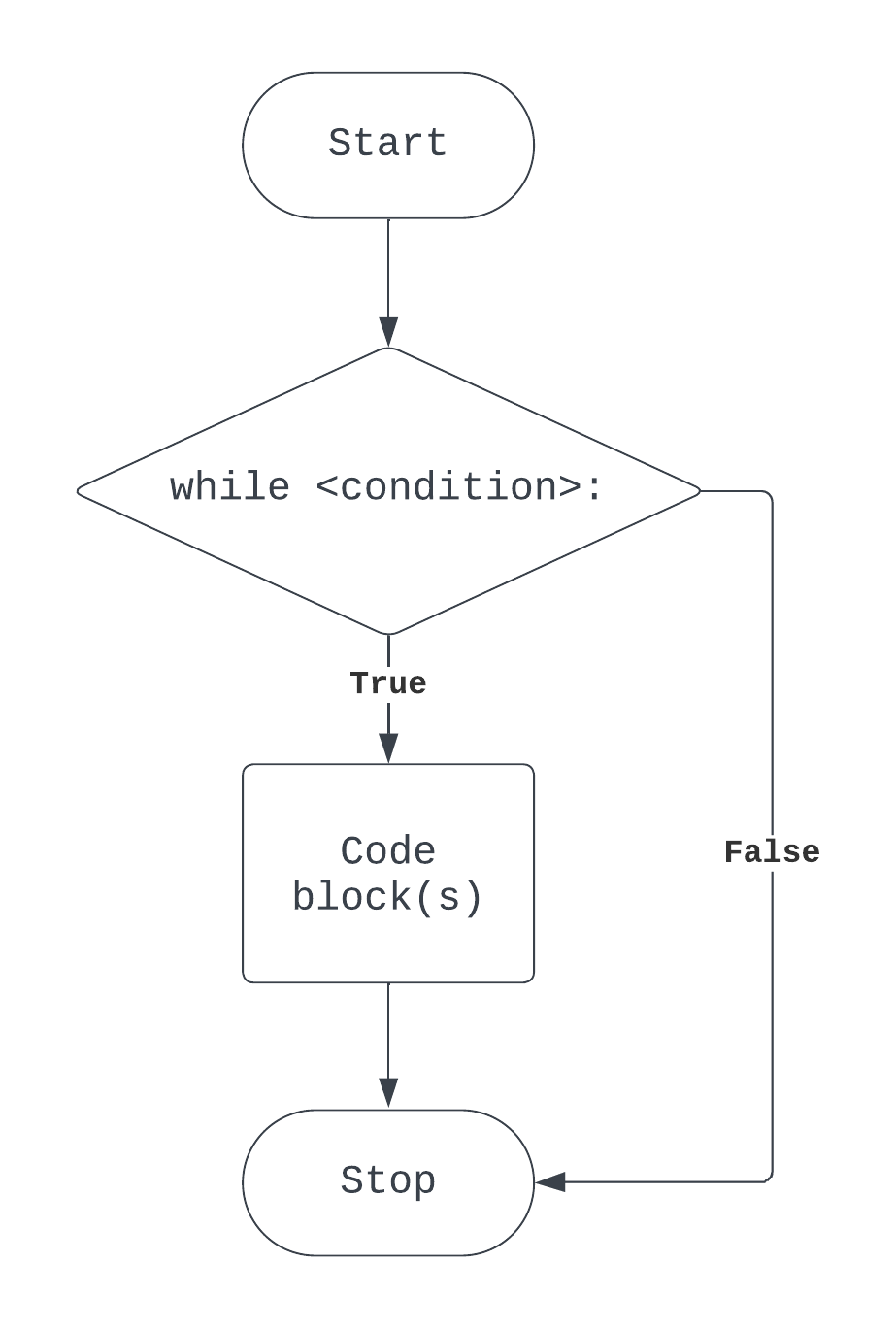
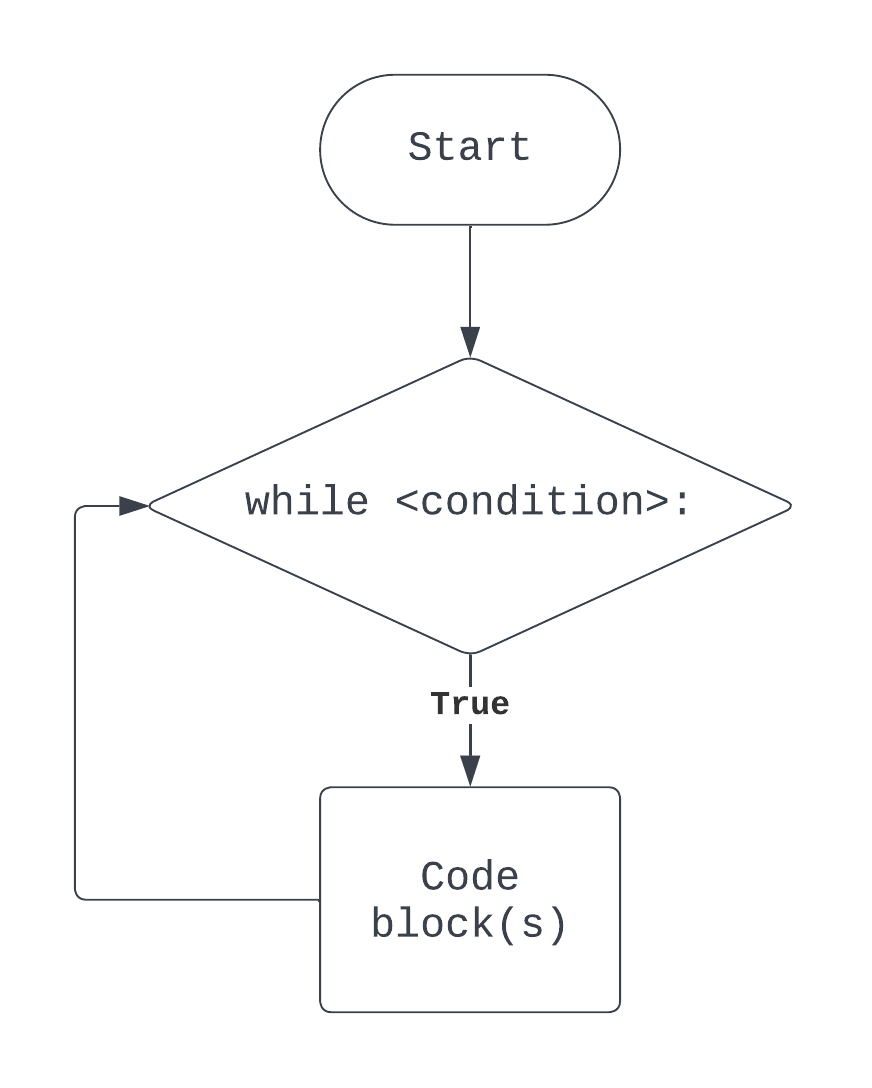
In Python, a while loop is a control flow statement that repeatedly executes a code block if a specified condition remains True. It provides a way to create iterative processes in your code, allowing you to repeat instructions until a specific condition is met or becomes False.
The syntax of a while loop consists of the keyword while, followed by a condition, and a colon :. The code block to be executed repeatedly is indented underneath the while statement. Inside the code block, you typically include statements that update the variables involved in the condition, ensuring that the loop eventually terminates when the condition evaluates to False.
# Imports go at the top
from microbit import *

# Scroll "Python" on the display
display.scroll('Python')
# Imports go at the top
from microbit import *


message = 'Python'

# Scroll "Python" on the display
display.scroll(message)
A Simple while Loop#
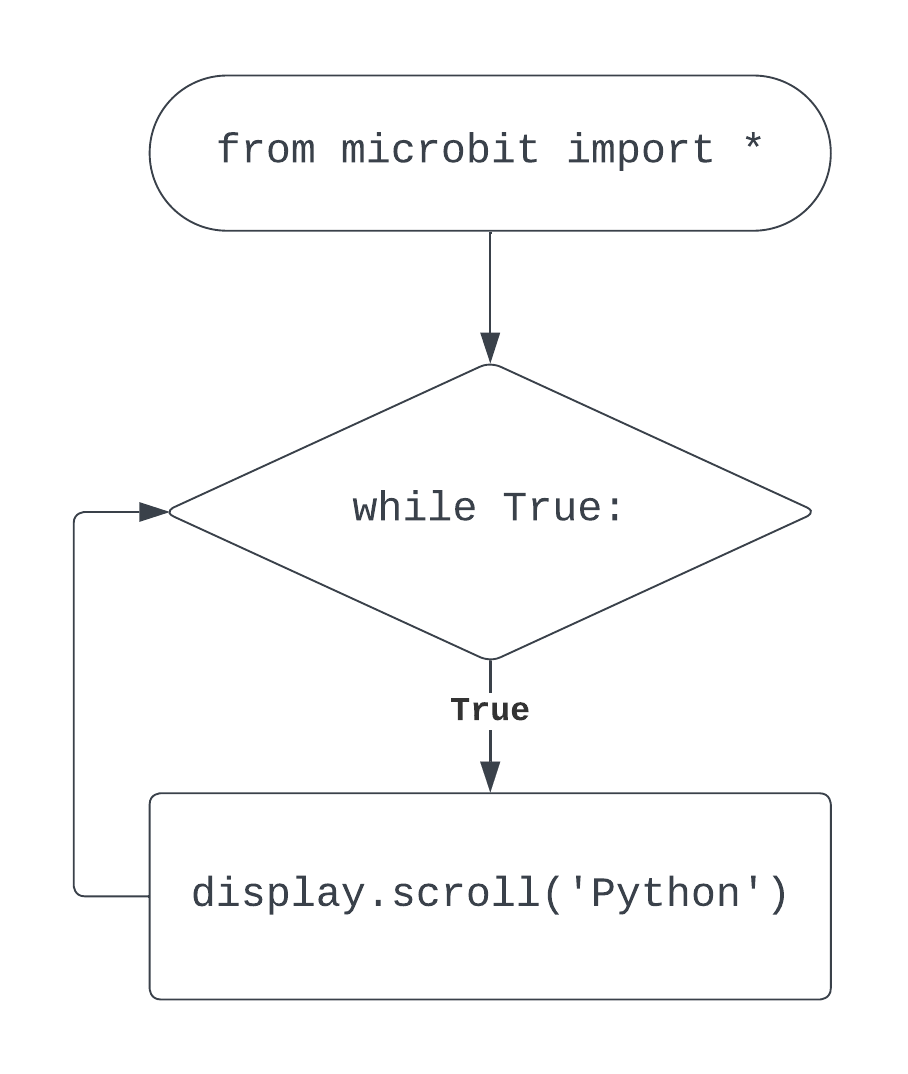
A Typical micro:bit while Loop#
# Imports go at the top
from microbit import *

# Code in a 'while True:' loop repeats forever
while True:
    # Scroll "Python" on the display
    display.scroll('Python')
# Imports go at the top
from microbit import *

# Code in a 'while True:' loop repeats forever
while True:
    # Show each character of "Python" individually on the display
    display.show('Python')
TODO